
Master Cambridge A Level Biology — all the way to A*
Every topic on the Cambridge 9700 syllabus, taught with the precision and exam technique that top mark bands actually demand — so you stop guessing and start reasoning like a biologist.

"My job isn't to cover the syllabus — it's to make sure you actually understand it, and that you can prove it on the page."
— Renstay College
What you'll learn
What you'll be able to do
- Recall and explain every core topic on the Cambridge 9700 syllabus — from cell biology and biological molecules to genetics, ecology, and homeostasis
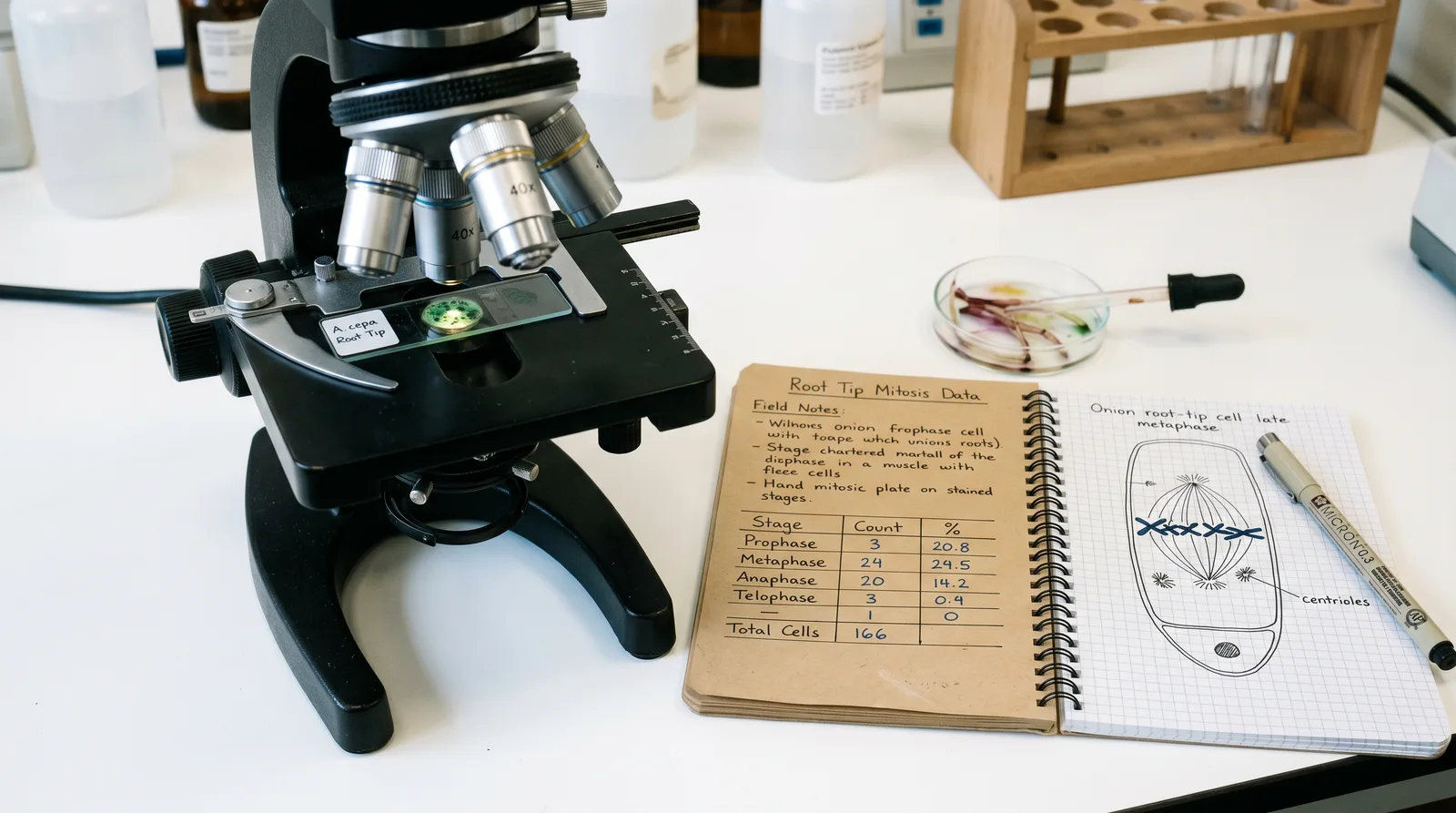
- Draw, annotate, and interpret biological diagrams (cells, mitosis, heart, nephron, synapses) to the standard expected in Cambridge mark schemes
- Apply command-word technique (describe, explain, suggest, evaluate) to consistently earn full marks on structured exam questions
- Plan and analyse AS and A2 practical experiments, including results tables, graph plotting, error analysis, and statistical tests required by the syllabus
- Tackle challenging multiple-choice and data-response questions by using elimination strategies and quantitative reasoning with confidence
- Construct well-evidenced extended-response answers on topics such as evolution, immunity, and gene expression that satisfy Cambridge's highest mark-band descriptors
How it works
A school that adapts to you
This isn't a set of static videos. Every lesson is generated live and tuned to where you actually are.
We learn your level
A quick placement check tailors your starting point so you're never bored or lost.
Lessons adapt as you go
Each lesson is written for your pace and your goal, adjusting as your skills grow.
Your AI coach keeps you moving
Checkpoints, feedback, and gentle nudges turn progress into a real result.
The curriculum
What's inside your school
26 modules · 81 lessons

Biological Molecules
Covers the structure, properties, and biological roles of all major macromolecules tested on the 9700 syllabus.
- 1.1Water and Inorganic IonsIncluded
- 1.2CarbohydratesIncluded
- 1.3LipidsIncluded
- 1.4Proteins and Amino AcidsIncluded
- 1.5Nucleic Acids and ATPIncluded
Cell Structure and Transport
Builds understanding of cell ultrastructure, membrane biology, and the mechanisms cells use to move substances.
- 2.1Prokaryotic and Eukaryotic Cell StructureIncluded
- 2.2Cell Membranes and the Fluid Mosaic ModelIncluded
- 2.3Diffusion, Osmosis, and Active TransportIncluded
- 2.4Cell Division — Mitosis and the Cell CycleIncluded
- 2.5Microscopy and Magnification CalculationsIncluded
Enzymes, Respiration, and Photosynthesis
Explores enzyme kinetics and the two major metabolic pathways that underpin all cellular energy transformations.
- 3.1Enzyme Structure and MechanismIncluded
- 3.2Enzyme Inhibition and CofactorsIncluded
- 3.3Glycolysis and Anaerobic RespirationIncluded
- 3.4Aerobic Respiration — Krebs Cycle and Oxidative PhosphorylationIncluded
- 3.5Photosynthesis — Light-Dependent and Light-Independent ReactionsIncluded
Genetics, Molecular Biology, and Biotechnology
Covers DNA replication, gene expression, inheritance patterns, and the biotechnological applications examined at A2.
- 4.1DNA Replication and the Genetic CodeIncluded
- 4.2Transcription, Translation, and Gene ExpressionIncluded
- 4.3Meiosis, Genetic Variation, and InheritanceIncluded
- 4.4Mutations and their ConsequencesIncluded
- 4.5Genetic Technologies and BiotechnologyIncluded
Physiology — Transport, Coordination, and Homeostasis
Covers the key animal and plant physiological systems assessed in both AS and A2 components of the 9700 syllabus.
- 5.1The Circulatory System and the HeartIncluded
- 5.2Gas Exchange — Lungs, Gills, and InsectsIncluded
- 5.3The Immune System — Innate and Adaptive ImmunityIncluded
- 5.4Homeostasis — Blood Glucose, Temperature, and the KidneyIncluded
- 5.5Nerves, Synapses, and HormonesIncluded
- 5.6Plant Transport and ResponsesIncluded
Ecology, Evolution, and Classification
Covers population ecology, biodiversity, natural selection, and classification as tested in the A2 syllabus.
- 6.1Populations, Communities, and EcosystemsIncluded
- 6.2Biodiversity, Classification, and the Five KingdomsIncluded
- 6.3Natural Selection and EvolutionIncluded
- 6.4Conservation BiologyIncluded
Practical Skills, Data Analysis, and Exam Technique
Builds the experimental, statistical, and command-word skills needed to maximise marks across all assessed components.
- 7.1Planning and Conducting AS & A2 PracticalsIncluded
- 7.2Graph Plotting, Error Analysis, and Statistical TestsIncluded
- 7.3Interpreting Data-Response and Multiple-Choice QuestionsIncluded
- 7.4Command Words and Structured Question TechniqueIncluded
- 7.5Extended-Response and Essay Writing for Top Mark BandsIncluded
Cell structure
All organisms are composed of cells. Knowledge of the structure and function of cells underpins much of
biology. The fundamental differences between eukaryotic and prokaryotic cells are explored and provide
useful biological background for the topic on Infectious diseases (Topic 10). Viruses are introduced as non
cellular structures, which gives candidates the opportunity to consider whether cells are the basic unit of life.
The use of light microscopes is a fundamental skill that is developed in this topic and applied throughout
several other topics of the syllabus.
- 8.1The microscope in cell studiesIncluded
- 8.2Cells as the basic units of living organismsIncluded
- 8.3Cells as the basic units of living organisms (continued)Included
- 8.4New lessonIncluded
Biological molecules
This topic introduces carbohydrates, lipids and proteins: organic molecules that are important in cells. Nucleic
acids, another class of biological molecule, are covered in Topic 6. All of these molecules are based on the
versatile element carbon. This topic explains how carbohydrates, lipids and proteins, which have a great
diversity of function in organisms, are assembled from smaller organic molecules such as glucose, amino
acids, glycerol and fatty acids.
The emphasis in this topic is on the relationship between molecular structures and their functions. Some
of these ideas are continued in other topics, for example, the functions of haemoglobin in gas transport in
Transport in mammals (Topic 8), phospholipids in membranes in Cell membranes and transport (Topic 4) and
antibodies in Immunity (Topic 11).
Life as we know it would not be possible without water. Understanding the properties of this extraordinary
molecule is an essential part of any study of biological molecules. Some of the roles of water are in this topic,
others are in Topics 4, 7, 8, 12, 13 and 14.
- 9.1Testing for biological moleculesIncluded
- 9.2Carbohydrates and lipidsIncluded
- 9.3ProteinsIncluded
- 9.4WaterIncluded
Enzymes
Enzymes are essential for life to exist. The mode of action of enzymes and the factors that affect their activity
are explored in this topic. Prior knowledge for this topic is an understanding that an enzyme is a biological
catalyst that increases the rate of a reaction and remains unchanged when the reaction is complete.
There are many opportunities in this topic for candidates to gain experience of carrying out practical
investigations and analysing, interpreting and evaluating their results.
- 10.1Mode of action of enzymesIncluded
- 10.2Factors that affect enzyme actionIncluded
Cell membranes and transport
The fluid mosaic model, introduced in 1972, describes the way in which biological molecules are arranged to
form cell membranes. The model continues to be modified as understanding improves of the ways in which
substances cross membranes, how cells interact and how cells respond to signals. The model also provides
the basis for our understanding of passive and active movement of molecules and ions between cells and
their surroundings, cell-to-cell interactions and long-distance cell signalling.
Investigating the effects of different factors on diffusion, osmosis and membrane permeability involves an
understanding of the properties of phospholipids and proteins covered in Biological molecules (Topic 2).
- 11.1Fluid mosaic membranesIncluded
- 11.2Movement into and out of cellsIncluded
The mitotic cell cycle
When body cells reach a certain size they divide into two cells. Nuclear division occurs first, followed by
division of the cytoplasm. The mitotic cell cycle of eukaryotes involves DNA replication followed by nuclear
division. This ensures the genetic uniformity of all daughter cells.
- 12.1Replication and division of nuclei and cellsIncluded
- 12.2Chromosome behaviour in mitosisIncluded
Nucleic acids and protein synthesis
Nucleic acids have roles in the storage and retrieval of genetic information and in the use of this information
to synthesise polypeptides. DNA is the molecule of heredity and is an extremely stable molecule that cells
replicate with great accuracy. The genetic code explains how the sequence of nucleotides in DNA and
messenger RNA (mRNA) determines the sequence of amino acids that make up a polypeptide. In eukaryotes
this involves the processes of transcription in the nucleus to produce mRNA, followed by translation in the
cytoplasm to produce polypeptides.
- 13.1Structure of nucleic acids and replication of DNAIncluded
- 13.2Protein synthesisIncluded
Transport in plants
Flowering plants do not have compact bodies like those of many animals. Leaves and extensive root systems
spread out to obtain the light energy, carbon dioxide, mineral ions and water that plants gain from their
environment to make organic molecules, such as sugars and amino acids. Transport systems in plants move
substances from where they are absorbed or produced to where they are stored or used.
- 14.1Structure of transport tissuesIncluded
- 14.2Transport mechanismsIncluded
Transport in mammals
As animals become larger, more complex and more active, transport systems become essential to supply
nutrients to, and remove waste from, individual cells. Mammals are far more active than plants and require
much greater supplies of oxygen. This is transported by haemoglobin inside red blood cells.
- 15.1The circulatory systemIncluded
- 15.2Transport of oxygen and carbon dioxideIncluded
- 15.3The heartIncluded
Gas exchange
The gas exchange system is responsible for the uptake of oxygen into the blood and the excretion of carbon
dioxide. An understanding of this system shows how cells, tissues and organs function together to exchange
these gases between the blood and the environment.
- 16.1The gas exchange systemIncluded
Infectious diseases
The infectious diseases studied in this topic are caused by pathogens that are transmitted from one human
host to another. Some, like Plasmodium that causes malaria, are transmitted by vectors, but there are many
other methods of transmission, such as through water and food or during sexual activity. An understanding
of the biology of the pathogen and its mode of transmission is essential if the disease is to be controlled and
ultimately prevented.
- 17.1Infectious diseasesIncluded
- 17.2AntibioticsIncluded
Immunity
An understanding of the immune system shows how cells and molecules function together to protect the
body against infectious diseases and how, after an initial infection, the body is protected from subsequent
infections by the same pathogen. Phagocytosis is an immediate non-specific part of the immune system,
while the actions of lymphocytes provide effective defence against specific pathogens.
- 18.1The immune systemIncluded
- 18.2Antibodies and vaccinationIncluded
Energy and respiration
Energy is a fundamental concept in biology. All living organisms require a source of cellular energy to drive
their various activities. All organisms respire by using enzyme-catalysed reactions to release energy from
energy-rich molecules such as glucose and fatty acids and transfer that energy to ATP. ATP is the universal
energy currency of cells. In eukaryotes, aerobic respiration occurs in mitochondria.
The practical activities in this topic give opportunities for candidates to plan investigations, analyse and
interpret data and evaluate experimental procedures and the quality of the data collected.
- 19.1EnergyIncluded
- 19.2RespirationIncluded
Photosynthesis
Photosynthesis is the energy transfer process that is the basis of nearly all life on Earth. It provides energy
directly or indirectly to all the organisms in most food chains. In eukaryotes, the process occurs within
chloroplasts. Candidates should apply their knowledge of plant cells from Cell structure (Topic 1) and leaf
structure from Transport in plants (Topic 7) while studying photosynthesis. Various environmental factors
influence the rate at which photosynthesis occurs.
The practical activities in this topic give opportunities for candidates to plan investigations, analyse and
interpret data and evaluate experimental procedures and the quality of the data that they collect.
- 20.1Photosynthesis as an energy transfer processIncluded
- 20.2Investigation of limiting factorsIncluded
Homeostasis
Cells function most efficiently if they are kept in near optimum conditions. Cells in multicellular animals are
surrounded by tissue fluid. The composition of tissue fluid is kept constant by exchanges with the blood as
discussed in the topic on Transport in mammals (Topic 8). In mammals, core temperature, blood glucose
concentration and blood water potential are maintained within narrow limits to ensure the efficient operation
of cells. Prior knowledge for this topic includes an understanding that waste products are excreted from the
body and an outline of the structure and function of the nervous and endocrine systems. In plants, guard
cells respond to fluctuations in environmental conditions and open and close stomata as appropriate for
photosynthesis and conserving water.
- 21.1Homeostasis in mammalsIncluded
- 21.2Homeostasis in plantsIncluded
Control and coordination
All the activities of multicellular organisms require coordinating, some very rapidly and some more slowly. The
nervous system and the endocrine system provide coordination in mammals. Coordination systems also exist
in plants.
- 22.1Control and coordination in mammalsIncluded
- 22.2Control and coordination in plantsIncluded
Inheritance
Genetic information is transmitted from generation to generation to maintain the continuity of life. In sexual
reproduction, meiosis introduces genetic variation so that offspring resemble their parents but are not
identical to them. Genetic crosses reveal how some features are inherited. The phenotype of organisms is
determined partly by the genes that they have inherited and partly by the effect of the environment. Genes
determine how organisms develop; gene control in bacteria gives us a glimpse of this process in action.
- 23.1Passage of information from parents to offspringIncluded
- 23.2The roles of genes in determining the phenotypeIncluded
- 23.3Gene controlIncluded
Selection and evolution
Selection and evolution
- 24.1VariationIncluded
- 24.2Natural and artificial selectionIncluded
- 24.3EvolutionIncluded
Classification, biodiversity and conservation
Classification systems attempt to order all the organisms that exist on Earth according to their characteristics
and evolutionary relationships with one another. There are opportunities in this topic for candidates to observe
different species in their locality and assess species distribution and abundance. Fieldwork is an important
part of a biological education because it provides opportunities to appreciate and analyse biodiversity, and to
study the interactions between organisms and their environment. The biodiversity of the Earth is threatened
by human activities and climate change. Conserving biodiversity is a difficult task; individuals, local groups,
national and international organisations can all make significant contributions. Candidates should appreciate
the threats to biodiversity and consider some of the steps taken in conservation, both locally and globally.
- 25.1ClassificationIncluded
- 25.2BiodiversityIncluded
- 25.3ConservationIncluded
Genetic technology
The discovery in the early 1950s of the structure of DNA by Watson and Crick, supported by the work of
Franklin, Wilkins and Chargaff, and discoveries since, have led to many applications of genetic technology in
areas of medicine, agriculture and forensic science. This topic relies heavily on prior knowledge of DNA and
RNA structure and protein synthesis from the topic on Nucleic acids and protein synthesis (Topic 6).
Candidates will benefit from carrying out practical work using electrophoresis, either with DNA or specially
prepared dyes used to represent DNA.
- 26.1Principles of genetic technologyIncluded
- 26.2Genetic technology applied to medicineIncluded
- 26.3Genetically modified organisms in agricultureIncluded
Who it's for
Is this you?

The A* Chaser
Already performing well but wants the precision and exam-technique edge that separates A from A* in extended-response and data questions.

The Private Candidate
Studying independently without classroom support and needs a fully structured, self-contained programme that covers every syllabus topic in the right sequence.

The International School Student
Attending a school where lesson time is limited or teaching quality is inconsistent, and needs reliable, syllabus-accurate instruction to fill the gaps.

The Home-schooler
Learning at home and needs a rigorous, teacher-led course that covers both the content and the practical skills component of the Cambridge 9700 exam.

The Exam-Technique Struggler
Understands the biology but consistently loses marks on structured questions — and needs to master command words, mark-scheme logic, and answer construction.

The Topic Gap Filler
Solid in some areas but has clear weak spots — molecular biology, respiration, or homeostasis — and needs focused, high-quality lessons to shore up those gaps before exams.
Questions
Frequently asked
Your teacher
A note from your teacher
Renstay College
If you've ever read a mark scheme answer and thought, "I knew that — so why didn't I write it?" — I want you to know that frustration is completely normal, and it's exactly what this course is designed to fix.
A Level Biology is not short of content. From the molecular geometry of a polypeptide to the pressure-flow hypothesis in phloem transport, the syllabus demands breadth, depth, and precision all at once. Most students work hard. They read their notes, they attempt past papers, and they still find themselves a mark band or two short of where they know they should be. The gap is rarely about effort. It's about the connection between understanding a concept and being able to express it in the language Cambridge examiners actually reward.
That's the gap this course is built to close. Every lesson uses exact syllabus terminology — not because biology is about memorising words, but because precise language is how you demonstrate precise understanding. I'll walk you through the mechanisms you need to genuinely grasp: why sodium-potassium pumps create the resting potential, how the light-independent reactions are dependent on the light-dependent ones in ways that matter for exam questions, what Cambridge really means when it asks you to evaluate evidence for natural selection. We work through diagrams, data sets, extended-response scaffolds, and multiple-choice elimination strategies — not as separate bolt-ons, but as part of learning the biology itself.
I also know that many of you are studying without a teacher in the room — as private candidates, home-schoolers, or students in schools where A Level Biology support is thin. I've structured this course so that you have everything you need in one place, in a logical sequence that builds confidence step by step. You won't be left wondering what to study next or whether you've covered enough.
The goal isn't just to help you pass. It's to help you sit down in that exam hall and feel genuinely prepared — able to read a question you've never seen before and know how to approach it, because you understand the biology and you know how to show that understanding. That's what A and A* grades look like, and that's what we're working towards together. I'm glad you're here — let's get to work.
— Renstay College
Start your journey today
Get instant access — learn at your own pace with an AI coach in your corner.
$10/mo
Recurring billing · cancel anytime
Enrolling a child? Sign up as a parent — you'll add your student right here after.
Secure checkout · Instant access
- 26 modules, 81 lessons
- AI-adaptive lessons tuned to your level
- Quizzes & checkpoints to lock in progress
- Your own AI learning coach
- Learn on any device, at your pace
- Full access for as long as you're subscribed